Traditional Bakers in the UK
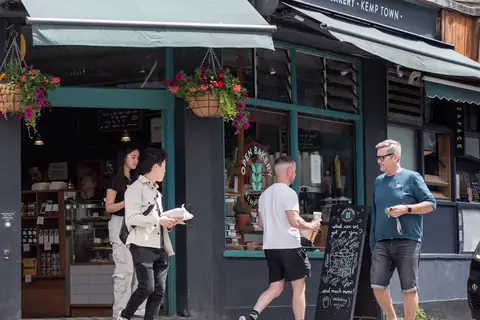
Before coffee-shop bakeries and sourdough micro-bakeries, every British town had its baker: a shop with a bell over the door, white tin loaves stacked behind the counter, iced fingers in the window and a queue of builders at eight o'clock for hot sausage rolls. Many of those family firms are still trading, some into their fourth or fifth generation, and they remain the best place for honest, affordable everyday baking.
Our map of traditional bakers and family-run high-street shops comes from open data, and one tap on 'Find near me' puts the closest at the top. These shops tend to open early – often 7am or before – and close mid to late afternoon, with savoury items freshest at breakfast and lunchtime. Many also supply local cafés, schools and pubs, so their bread may already be familiar.
Find traditional bakers near you
Share your location (it never leaves your browser except to sort this list) or type a UK postcode.
Traditional Bakers by city
Popular traditional bakers 1–30 of 5,366
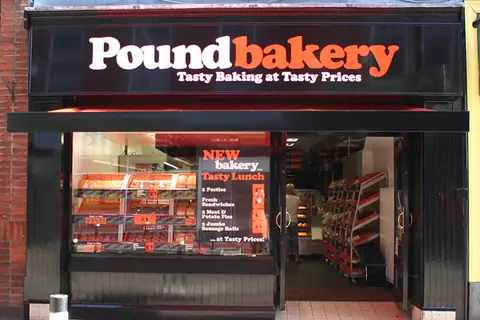
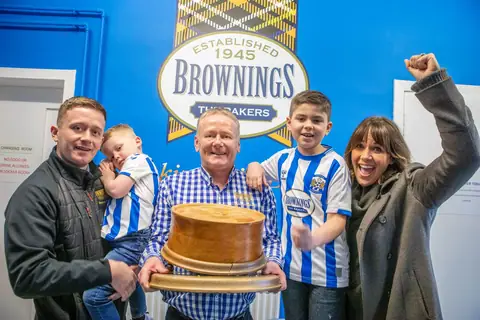
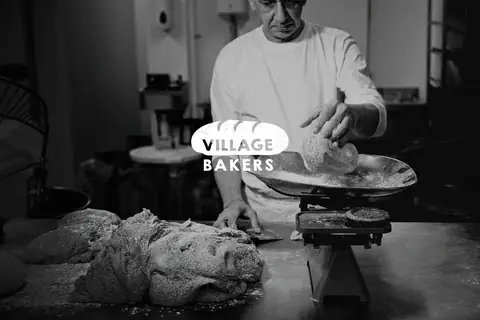
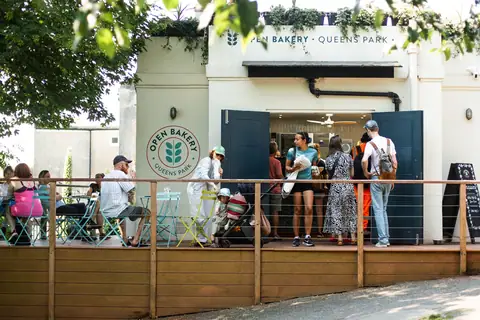
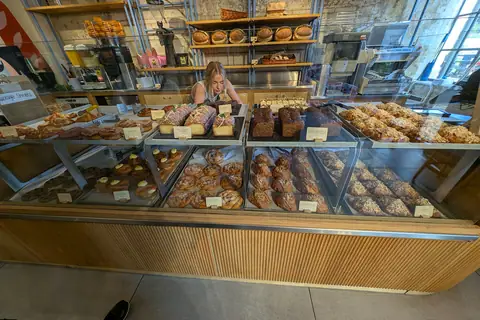
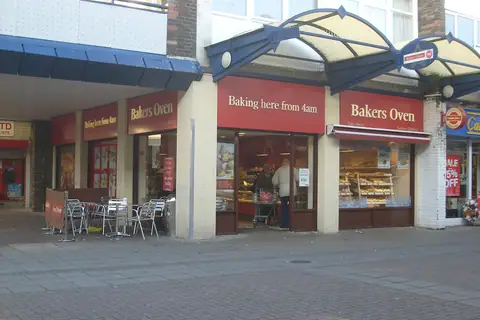
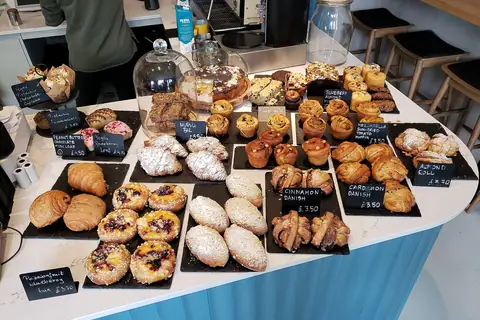
The regional map of British baking
Traditional bakers are where regional specialities survive. Travel the length of the country and the counter changes:
- Cornwall and Devon – pasties with a crimped edge, saffron buns, splits with clotted cream
- Yorkshire and Lancashire – parkin, Eccles cakes, oven-bottom muffins, barm cakes
- The Midlands – Staffordshire oatcakes, pork pies, Bakewell puddings and tarts
- Scotland – morning rolls, Scotch pies, empire biscuits, tattie scones
- Wales – bara brith and Welsh cakes cooked on a bakestone
- Northern Ireland – soda farls, potato bread, wheaten bread and fifteens
- The North East – stotties and pease pudding sandwiches
Why the old-school baker still matters
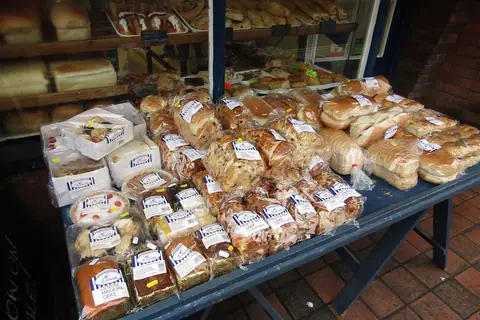
A traditional baker is about value and routine rather than novelty. Bloomers, farmhouse and tin loaves are baked daily and are usually cheaper than artisan sourdough, while savouries such as steak bakes and cheese-and-onion pasties make a filling lunch for a few pounds. Many family bakers still make their own pastry and mincemeat, cook hams for sandwiches in-house and decorate celebration cakes to order.
They are also often flexible: ask for a sliced loaf, a dozen bread rolls for a buffet or a tray of cream cakes for an office birthday, and most will sort it out with a day's notice.
Tips before you go
- Go early for savouries: sausage rolls and pasties are baked in morning and lunchtime batches.
- Many traditional bakers sell yesterday's bread and cakes at a discount late in the day – ask what is reduced.
- For buffets and funerals, ask about sandwich platters and bulk rolls; family bakers often cater locally.
- Pre-packed items made on site must carry a full ingredients and allergen label under Natasha's Law – read it rather than guessing.
- If you want bread sliced, mention whether you prefer thick or medium; most shops can do either.
Fun fact: The 'baker's dozen' of thirteen is most often traced to medieval England, where strict laws on loaf weight under the Assize of Bread and Ale led bakers to add an extra item to avoid being accused of short-changing customers.
What to order
- Sausage rollFlaky pastry and a peppery filling, best bought warm in the morning.
- Farmhouse or tin loafThe classic sandwich bread, sliced to order on the shop's machine.
- Iced finger or Chelsea bunSoft, sweet enriched dough – nostalgic and cheap.
- Cream horn or cream slicePuff pastry with fresh cream and jam, a teatime favourite.
- Regional pasty or pieWhatever your area is known for, the local baker probably does it best.
- Barm cakes or bread rolls by the dozenIdeal for a buffet, a barbecue or a family fry-up.
- Jam doughnutSugared, fried and generously filled – the high-street version of a classic.
Typical prices in 2026
| Item | Typical range | Notes |
|---|---|---|
| White or wholemeal tin loaf (800g) | £1.80–£3.50 | Usually sliced free on request |
| Sausage roll | £1.30–£2.80 | Jumbo sizes cost more |
| Pasty or steak bake | £2.80–£4.80 | Large Cornish-style pasties at the top end |
| Bread rolls / barm cakes | £0.45–£0.90 each | Often cheaper by the half-dozen |
| Cream cake or cream slice | £1.80–£3.50 | Keep refrigerated |
| Iced bun or doughnut | £1.00–£2.20 | Multi-buy deals are common |
Guide prices across UK independents and chains; London and specialist bakeries often sit at the top of the range.
Frequently asked questions
Are there still traditional bakers near me?
Yes – although chains have replaced many, thousands of independent and family bakers still trade across the UK, especially in market towns and suburbs. Use 'Find near me' to see the closest ones. Small towns frequently have a long-established baker on the high street, sometimes with a second branch in a neighbouring village.
What time do bakers open in the morning?
Traditional bakers are early risers. Many shops open between 6:30am and 8am to catch commuters and tradespeople, and the bakers themselves may have started work in the small hours. Closing time is often between 3pm and 5:30pm. Hours on Saturday may be shorter and many close on Sundays.
Can I order bread rolls and sandwiches for a party from a local baker?
Most family bakers are happy to take bulk orders for rolls, sandwich platters, sausage rolls and cakes. Give at least 24 to 48 hours' notice for quantities beyond a couple of dozen, and longer around Christmas or bank holidays. Ask whether they deliver, as some will drop orders to local venues.
What is the difference between a bloomer and a tin loaf?
A bloomer is shaped by hand and baked free-standing on the oven floor or a tray, giving it a crusty, rounded top and slashes across the surface. A tin loaf is baked in a rectangular tin, which gives soft sides and a squarer slice ideal for sandwiches. The dough can be much the same.