Portuguese Bakeries in the UK
The pastel de nata – a blistered custard tart in a crackling puff-pastry shell – has done more than anything else to put Portuguese baking on the British map. But a proper pastelaria offers far more: soft papo-seco rolls, coconut queijadas, pão de Deus with its sugary coconut crust, bolas de Berlim stuffed with custard, and strong little coffees drunk standing at the counter. Communities in Lambeth, Jersey, Norfolk, Thetford and elsewhere have kept these traditions thriving for decades.
To find the pastelaria closest to you, press 'Find near me'; the open-data listings below cover Portuguese bakeries and cafés that bake in-house. Many open early for breakfast and stay busy into the evening, doubling as a café and community meeting point, and quite a few also sell Portuguese groceries, cured meats and wine. Here is what to look for when you get there.
Find portuguese bakeries near you
Share your location (it never leaves your browser except to sort this list) or type a UK postcode.
Portuguese Bakeries by city
Popular portuguese bakeries 1–22 of 22
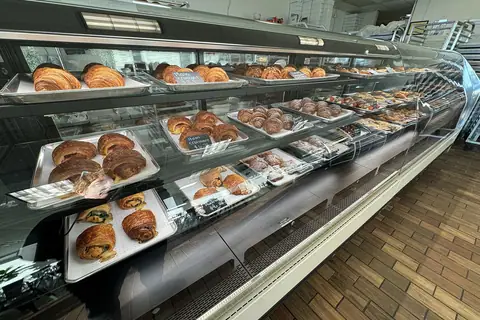


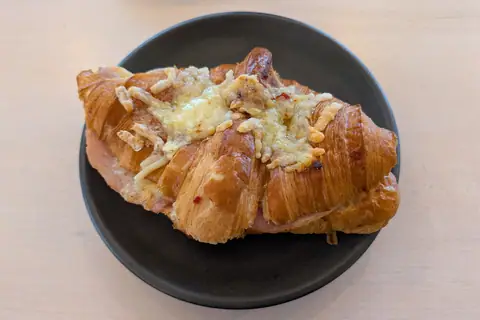

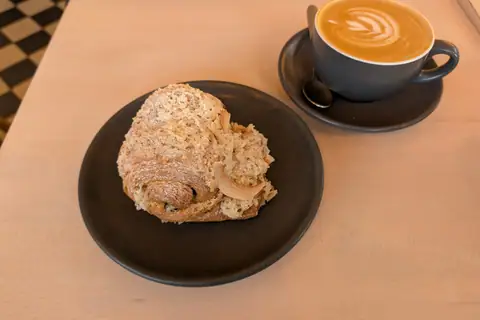
Brazilian Roots Bakery & Restaurant
Unit 13 To 13A, Market Village, 70 - 73 The Mall, Stratford E15 1XQ
Judging a pastel de nata
Because so many cafés now sell nata, quality varies wildly. A great one is best eaten within a few hours of baking, ideally still slightly warm. Check these points:
- Pastry: thin, crisp spiralled layers that shatter, not a soft or soggy base
- Custard: just set, creamy and wobbly in the centre, never rubbery or eggy
- Top: dark caramelised blisters from a very hot oven – pale tops mean a cooler bake
- Flavour: lemon zest and cinnamon in the background, not overly sweet
- Serving: a shaker of cinnamon and icing sugar on the counter to add your own
Beyond the custard tart
Portuguese breakfast often means a papo-seco – a crusty white roll – with butter or ham and cheese, and a galão (milky coffee in a glass). Savouries include rissóis (crumbed, half-moon pastries filled with prawn or meat), croquetes and bolinhos de bacalhau, little salt-cod cakes. At Easter look for folar, a sweet bread with whole eggs baked into it, and at Christmas bolo-rei, a ring cake studded with candied fruit and nuts.
Tips before you go
- Warm natas for a couple of minutes in a hot oven to crisp the pastry again – never in the microwave.
- Natas contain egg, milk and wheat; they are not suitable for egg, dairy or gluten allergies.
- Order a bica (espresso) or galão alongside – Portuguese bakeries take their coffee seriously.
- Savoury trays of rissóis and croquetes are excellent value for parties; order a day ahead.
- Go mid-morning for the freshest natas, which are often baked in several batches.
Fun fact: Pastéis de nata are believed to have been created by monks at the Jerónimos Monastery in Belém, Lisbon, who used leftover egg yolks after using the whites to starch clothes; when the monasteries closed in the 1830s the recipe was sold, and a Belém bakery still guards it today.
What to order
- Pastel de nataThe custard tart that started it all – eat it warm with a dusting of cinnamon.
- Papo-secoA crusty, crackly roll that makes the perfect ham-and-cheese sandwich.
- Bola de BerlimA sugared doughnut split and filled with egg custard.
- Pão de DeusSoft brioche-like bun topped with a sweet coconut crust.
- QueijadaA small, dense tart made with cheese or coconut, depending on the region.
- Bolinhos de bacalhauSalt-cod and potato fritters, perfect with a cold drink.
- Bolo de arrozA rice-flour muffin in its signature paper collar.
Typical prices in 2026
| Item | Typical range | Notes |
|---|---|---|
| Pastel de nata | £1.50–£3.20 | Boxes of six usually discounted |
| Box of 6 natas | £8–£16 | Ask for them on the day of baking |
| Papo-seco roll | £0.40–£0.90 | Filled rolls £3–£5 |
| Bola de Berlim | £1.80–£3.20 | Custard-filled |
| Savoury rissol or croquete | £1.20–£2.50 | Party trays to order |
| Bolo-rei | £12–£25 | Christmas season only |
Guide prices across UK independents and chains; London and specialist bakeries often sit at the top of the range.
Frequently asked questions
Where can I buy pastel de nata near me?
Portuguese bakeries are the most reliable source of freshly baked pastéis de nata. Press 'Find near me' to see the closest. Many cafés and supermarkets sell them too, but these are often baked from frozen. For the best result, buy them on the day they are baked, while the pastry still crackles.
What is the difference between a Portuguese custard tart and an English custard tart?
A Portuguese pastel de nata uses puff pastry and is baked at very high heat, so the custard caramelises in dark spots. An English custard tart uses shortcrust pastry, is baked gently so the custard stays pale and smooth, and is finished with grated nutmeg. Both are delicious but quite different.
How long do pastéis de nata keep?
They are at their best on the day of baking. They will keep in the fridge for a day or two, but the pastry softens. Reheat in an oven or air fryer at around 180°C for three to five minutes to restore the crunch. They do not freeze particularly well once baked.
Are Portuguese bakeries open on Sundays?
Many are, as Sunday morning coffee and pastries are a big part of Portuguese social life. Hours vary, though, and some close one day midweek instead. Check opening times on the listing or call ahead, particularly on bank holidays and around Portuguese festivals.