French Bakeries & Boulangeries in the UK
There is a particular smell to a French boulangerie at eight in the morning – caramelised crust, warm butter, a hint of yeast – and plenty of British bakeries now manage to bottle it. Some are run by French bakers who trained in the compagnonnage tradition; others are British-owned shops that have mastered the classics. Either way, they share a focus on bread made fresh through the day and viennoiserie laminated with butter.
Boulangeries, French bakeries and French-style bakery cafés from open data appear below; share your location with 'Find near me' and the nearest rises to the top. In France a boulangerie must legally make its bread on site; in the UK no such rule applies, so the guide below covers how to tell whether a shop is baking from scratch, which loaves to try and what a fair price looks like in 2026.
Find french bakeries near you
Share your location (it never leaves your browser except to sort this list) or type a UK postcode.
French Bakeries by city
Popular french bakeries 1–30 of 141
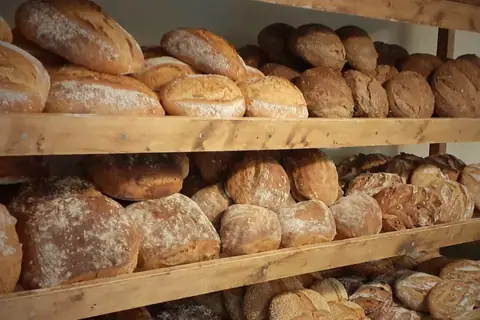
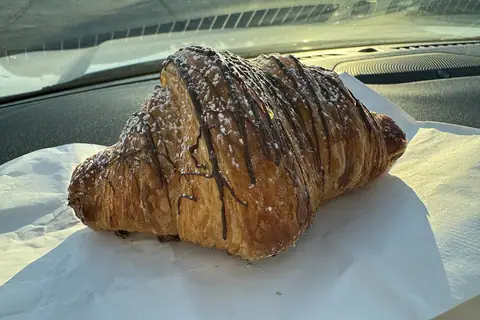
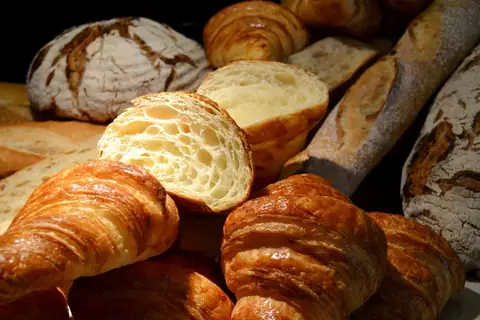
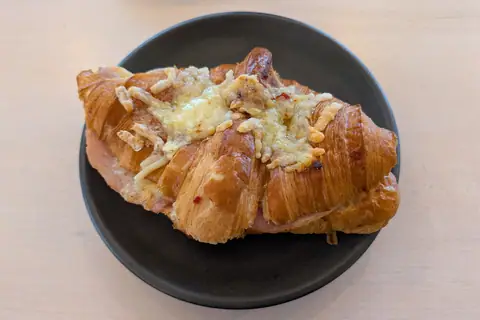
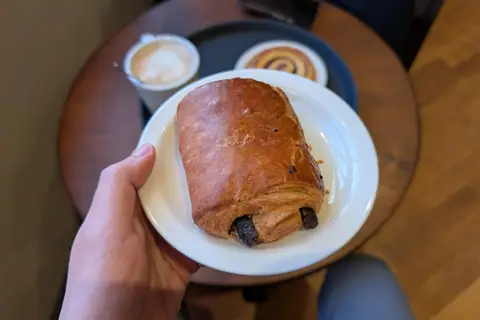
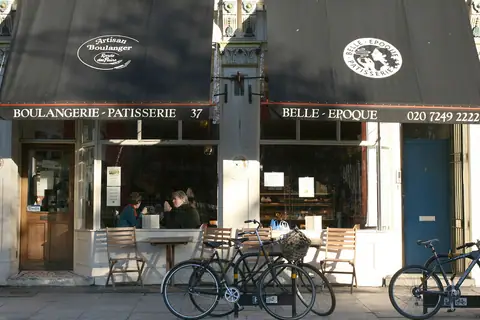
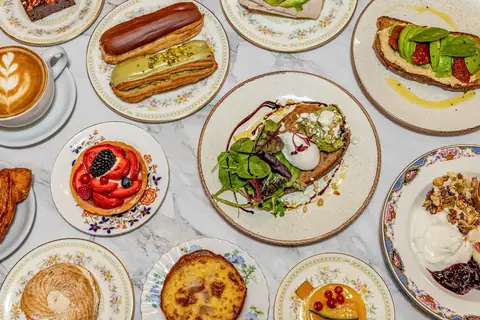

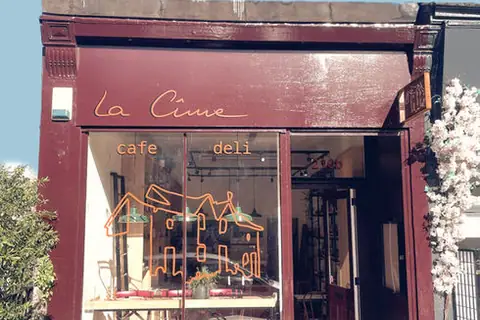
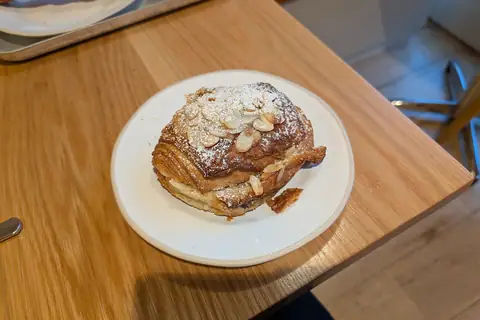

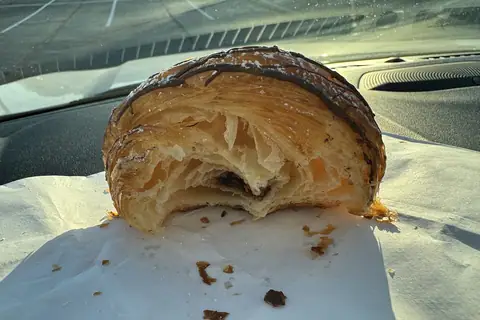
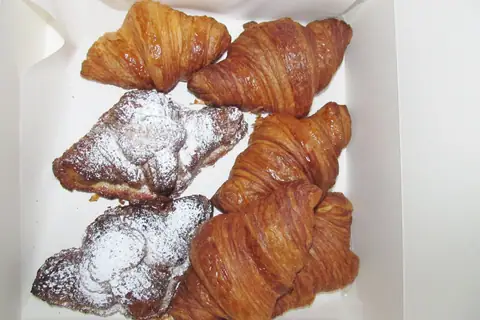
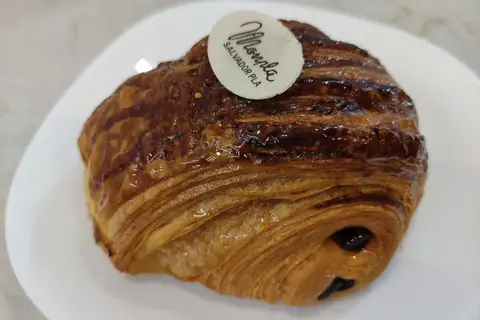
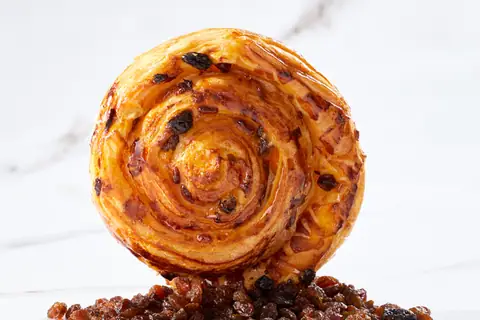
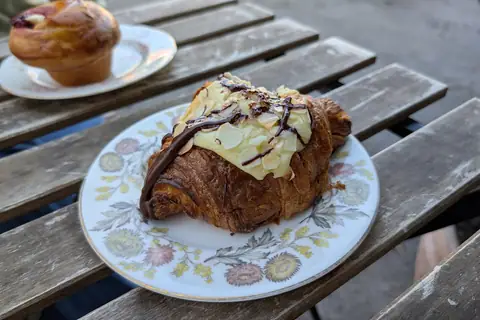

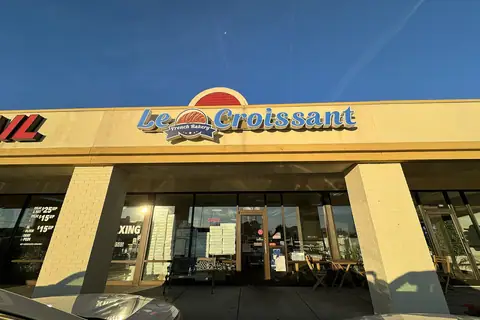
Pain, viennoiserie and pâtisserie
French baking falls into three families. Pain is bread: the baguette, the shorter bâtard, the rustic pain de campagne, the dense pain complet and the soft, enriched pain de mie used for croque-monsieur. Viennoiserie covers the morning pastries made from yeasted or laminated dough – croissants, pains au chocolat, pains aux raisins, chaussons aux pommes and brioche. Pâtisserie is the sweet, cream- and custard-filled side: éclairs, tarts, flan pâtissier and millefeuille.
A good French bakery in the UK usually concentrates on the first two and offers a smaller range of the third.
Signs of a serious boulangerie
- Baguettes baked several times a day rather than once at dawn
- Croissants made with butter (beurre) – look for the straight shape, which in France traditionally signals all-butter
- A tradition baguette (baguette de tradition) on the shelf, made without additives
- Pain de campagne with a mix of wheat and rye
- Seasonal items: galette des rois in January, bûche de Noël at Christmas
Tips before you go
- Buy baguettes as late as you can before eating them – they are at their best within four to six hours.
- Revive a day-old croissant in a hot oven for three or four minutes rather than the microwave.
- Ask whether the croissants are made in-house or 'baked off' from frozen; both exist, and the price should reflect it.
- French bakeries often pre-order galettes des rois and Christmas bûches – reserve a week ahead.
- Use stale baguette for pain perdu (French toast), croutons or breadcrumbs.
Fun fact: In 2022 UNESCO added the artisanal know-how and culture of baguette bread to its list of Intangible Cultural Heritage, recognising the skills of France's bakers rather than the loaf itself.
What to order
- Baguette de traditionCreamy, irregular crumb and a crackling crust – eat it within hours.
- Croissant au beurreCrisp, shattering outer layers and a soft, buttery honeycomb inside.
- Pain au chocolatTwo batons of dark chocolate in croissant dough, the French breakfast staple.
- Pain aux raisinsA spiral of laminated dough, crème pâtissière and raisins.
- Pain de campagneA larger country loaf that keeps for several days.
- Flan pâtissierThick, wobbly vanilla custard tart, sold by the slice.
- Galette des roisPuff pastry and frangipane for Epiphany, with a hidden charm inside.
Typical prices in 2026
| Item | Typical range | Notes |
|---|---|---|
| Baguette | £1.80–£3.50 | Tradition baguettes at the higher end |
| Croissant au beurre | £1.80–£3.50 | Almond croissants £3.20–£4.50 |
| Pain au chocolat | £2.20–£3.80 | Varies with chocolate quality |
| Pain de campagne | £4.00–£7.00 | Often sold by weight |
| Slice of flan or tart | £3.50–£5.50 | Whole tarts to order |
| Galette des rois (6–8 people) | £20–£38 | Usually January only |
Guide prices across UK independents and chains; London and specialist bakeries often sit at the top of the range.
Frequently asked questions
Is there a French boulangerie near me?
Tap 'Find near me' to sort French bakeries by distance. London has the largest concentration, particularly around South Kensington, but French-style bakeries are found in most UK cities and many market towns. Look for daily-baked baguettes and butter croissants as a sign of a genuine boulangerie rather than a café selling bought-in pastries.
What is the difference between a boulangerie and a patisserie?
A boulangerie's main trade is bread and viennoiserie – baguettes, country loaves, croissants. A pâtisserie specialises in refined sweet work such as éclairs, tarts and mousse cakes. In France many shops are a 'boulangerie-pâtisserie' doing both, and in the UK the line is blurred further, so many French bakeries here offer some of each.
Why do French baguettes go stale so quickly?
A traditional baguette contains only flour, water, salt and yeast, with no fats or preservatives, and its thin shape means a large crust-to-crumb ratio. Moisture escapes fast, so it is best eaten the day it is baked. That is why French families buy bread daily – and sometimes twice a day.
How much is a croissant at a French bakery in the UK?
In 2026 a plain all-butter croissant from an independent French bakery typically costs between about £1.80 and £3.50, with central London at the top of the range. Filled or twice-baked almond croissants cost more, usually £3.20–£4.50. Supermarket croissants are far cheaper but rarely use all-butter pastry.