Polish Bakeries in the UK
Poland has one of Europe's richest baking cultures, and since the mid-2000s Polish bakeries and delis have become part of everyday life in towns from Southampton to Aberdeen. They are the place to find dense, sour rye bread, poppy-seed rolls, enormous rose-jam doughnuts and baked cheesecake made with twaróg curd cheese – food that is cheap, filling and baked with real care. Many also stock Polish groceries, so you can pick up kiełbasa and pickles alongside your loaf.
Below are Polish bakeries and delis with in-house or freshly delivered baking, drawn from open data – the 'Find near me' button reorders them so the closest piekarnia comes first. Some bake on the premises; others take daily deliveries from Polish bakeries operating in the UK. Either way, the range is distinctive enough that it is worth a detour, especially in the run-up to Easter and Christmas.
Find polish bakeries near you
Share your location (it never leaves your browser except to sort this list) or type a UK postcode.
Polish Bakeries by city
Popular polish bakeries 1–6 of 6
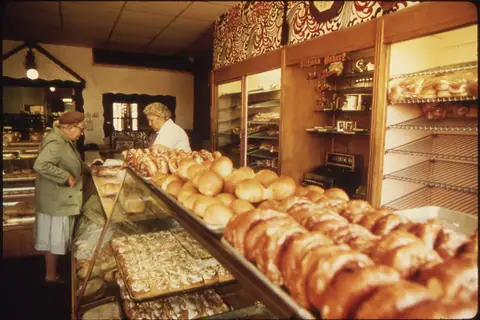
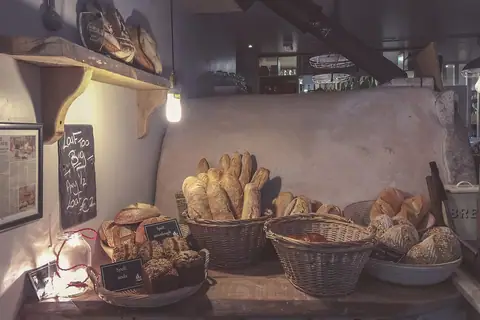
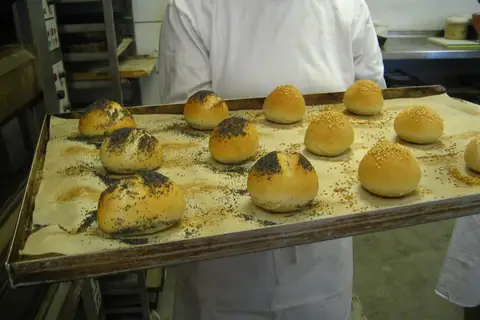
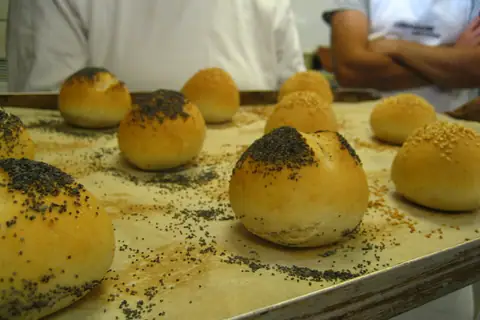
Eunice Artisan Bakery
15,15A, Huntingdon Business Centre, Stukeley Road, Huntingdon PE29 6HQ
A short guide to the Polish bread shelf
- Chleb żytni – rye bread, often sourdough-leavened, dense and slightly sour
- Chleb wiejski – 'country bread', a rustic wheat-rye loaf with a thick crust
- Chleb razowy – wholemeal rye, very dark and moist, sometimes with seeds
- Bułki – crusty white rolls for breakfast
- Kajzerki – Kaiser rolls with a pinwheel pattern on top
- Chałka – a sweet plaited loaf, similar to challah, often with crumble topping
Cakes and sweet buns
Polish cake counters lean towards yeast cakes and baked cheesecake rather than layered sponges. Sernik, made with twaróg, is drier and more crumbly than a New York cheesecake. Makowiec rolls a sweet poppy-seed filling inside yeast dough and is essential at Christmas. Drożdżówki are sweet yeast buns topped with crumble and filled with cheese, plum, or pudding. Szarlotka is the Polish apple cake – layers of shortcrust and spiced apple.
Around Easter look for babka, a tall, ring-shaped yeast cake, and mazurek, a flat, decorated tart. Before Lent comes Tłusty Czwartek, Fat Thursday, when queues for pączki stretch out of the door.
Tips before you go
- Polish bakery cakes are often sold by weight – ask for a piece and the counter will cut to order.
- Rye bread keeps well for up to a week wrapped in a cloth; it gets better on day two.
- If you have a gluten intolerance, note that rye contains gluten even though it has less than wheat.
- Pre-order for Fat Thursday, Easter and Wigilia (Christmas Eve) – bakeries sell out fast.
- Ask staff for recommendations; most are happy to explain unfamiliar cakes.
Fun fact: Traditional Polish bakers add a splash of strong spirit to pączki dough before frying; as it evaporates in the hot fat it helps stop the doughnuts soaking up too much oil.
What to order
- Rye sourdough loafSlice thinly for open sandwiches with butter, cured meats or cheese.
- PączekA dense, rich doughnut traditionally filled with rose-petal jam and glazed or sugared.
- SernikBaked cheesecake made from twaróg, sometimes with raisins or a chocolate top.
- DrożdżówkaSweet yeast bun with crumble on top and cheese or fruit inside.
- MakowiecPoppy-seed roll cake, glazed and often topped with orange peel.
- SzarlotkaApple cake served in squares, sometimes still warm.
Typical prices in 2026
| Item | Typical range | Notes |
|---|---|---|
| Rye or country loaf (500g–1kg) | £2.00–£4.50 | Often cheaper than British artisan bread |
| Rolls (bułki/kajzerki) | £0.35–£0.80 each | Bought by the bag |
| Pączek | £1.00–£2.20 | Prices rise slightly around Fat Thursday |
| Drożdżówka | £1.20–£2.50 | Varies with filling |
| Sernik or szarlotka (per kg) | £9–£16 | Usually sold by weight |
| Makowiec (whole) | £6–£14 | Most available at Christmas |
Guide prices across UK independents and chains; London and specialist bakeries often sit at the top of the range.
Frequently asked questions
Where can I find a Polish bakery near me?
Use 'Find near me' to sort Polish bakeries and delis by distance. Since many Polish shops combine a grocery with a bread and cake counter, listings may appear as delis or supermarkets. They are found across the UK, with large concentrations in London, the Midlands, Lincolnshire, Peterborough, Southampton, Scotland and Northern Ireland.
What is a pączek and when is it eaten?
A pączek (plural pączki) is a Polish doughnut made from a rich, eggy dough, traditionally filled with rose-petal jam or plum butter and topped with icing, sugar or candied orange peel. They are eaten all year, but especially on Fat Thursday, the last Thursday before Lent, when Poles eat them in huge numbers.
Is Polish rye bread healthier than white bread?
Wholemeal rye bread generally contains more fibre than white wheat bread and can be more filling, and sourdough fermentation gives it its characteristic sour taste. It still contains gluten and carbohydrate, so it is not suitable for coeliacs. Check the label, because some 'rye' loaves are mostly wheat flour.
What is the difference between sernik and normal cheesecake?
Sernik is made with twaróg, a fresh curd cheese, and is baked, giving a firmer, slightly grainy texture and a gently tangy flavour. Many British and American cheesecakes are made with smooth cream cheese and either baked or set in the fridge. Sernik often has a thin shortcrust or sponge base rather than crushed biscuits.