Middle Eastern Bakeries in the UK
Middle Eastern bakeries cover a vast stretch of the world, from Lebanon, Syria, Jordan and Palestine to Iraq, Iran and the Gulf, and each brings its own breads and sweets. What unites them is the oven: often a blistering deck or dome that turns out puffy flatbreads in seconds, along with manakish topped with za'atar and olive oil, cheese-stuffed pastries, and trays of syrup-soaked sweets fragrant with rose and orange-blossom water.
Lebanese, Syrian, Iraqi, Persian and other Middle Eastern bakeries from open data are gathered below, and a single press of 'Find near me' shows which oven is closest to you. Edgware Road, Shepherd's Bush, Acton, Birmingham, Manchester, Cardiff and Glasgow all have well-known clusters, but smaller towns increasingly have their own. Many are halal by default and open late, so they are as useful for a quick dinner as for an Eid order.
Find middle eastern bakeries near you
Share your location (it never leaves your browser except to sort this list) or type a UK postcode.
Middle Eastern Bakeries by city
Popular middle eastern bakeries 1–30 of 31
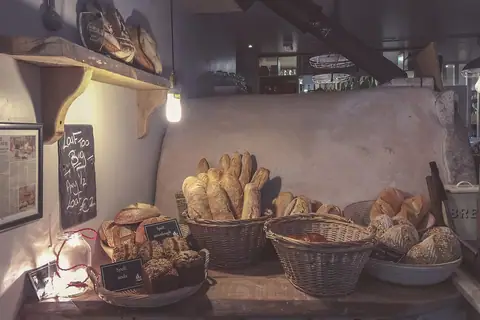

The bread counter
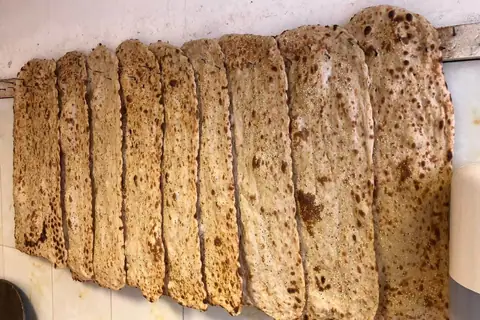
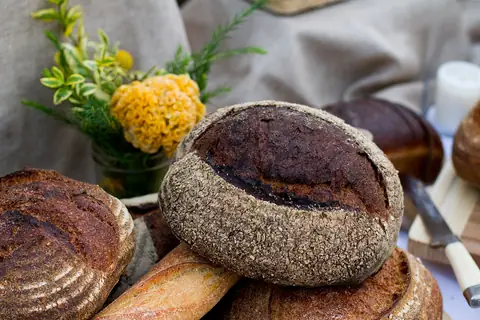
Flatbread is the heart of the bakery. Arabic pita (khubz) puffs up in the oven to form a pocket; markouk or saj bread is paper-thin, stretched over a domed griddle; Iraqi samoon is a diamond-shaped loaf with a soft centre; and Persian bakeries make sangak, baked on hot pebbles, and barbari, a long dimpled loaf with sesame. Ask what has just come out of the oven – these breads are at their best within minutes.
Manakish, sometimes called the Levantine pizza, are flatbreads baked with toppings: za'atar and olive oil, akkawi cheese, spiced minced lamb (lahm bi ajeen) or a mix.
Pastries and sweets, by family
- Fatayer – triangular pastries with spinach, cheese or meat
- Sfiha – open meat pies, often with pomegranate molasses
- Ma'amoul – shortbread pressed in carved moulds and filled with dates, pistachio or walnut
- Knafeh – shredded or semolina pastry over soft cheese, soaked in syrup
- Barazek – sesame and pistachio biscuits
- Basbousa (harissa) – semolina cake in syrup
- Ka'ak – sesame bread rings or crisp biscuit rings, depending on the region
Tips before you go
- Eat manakish straight away – they lose their magic within 15 minutes.
- Ask for a tray of mixed pastries for a gathering; most bakeries price them per dozen.
- Rosewater and orange-blossom water are used in many sweets – try a little first if you are not used to floral flavours.
- Most sweets contain nuts and semolina (wheat); knafeh also contains cheese.
- Order ma'amoul and sweet platters early before Eid, Ramadan nights and Easter.
Fun fact: Ma'amoul are shaped in carved wooden moulds, and the pattern traditionally tells you the filling – different designs mark date, pistachio and walnut versions so they can be told apart without biting into them.
What to order
- Za'atar manousheFresh from the oven, folded with tomato, cucumber and mint.
- Cheese and za'atar mixHalf-and-half topping for those who cannot decide.
- Spinach fatayerLemony, sumac-spiked spinach in soft dough triangles.
- KnafehServed warm, with stretchy cheese, a crisp top and syrup on the side.
- Date ma'amoulCrumbly semolina pastry with a soft date centre, essential at Eid and Easter.
- Fresh Arabic breadBuy a stack still warm and freeze what you do not use.
Typical prices in 2026
| Item | Typical range | Notes |
|---|---|---|
| Manoushe (za'atar) | £2.50–£4.50 | Cheese or meat add £1–£3 |
| Fatayer or sfiha (each) | £1.00–£2.50 | Party trays by the dozen |
| Pack of Arabic bread | £1.00–£2.50 | Usually 5–10 rounds |
| Knafeh portion | £5–£9 | Whole trays to order |
| Ma'amoul (per kg) | £14–£30 | Pistachio is the priciest |
| Mixed sweets platter | £15–£45 | Popular for Eid and visits |
Guide prices across UK independents and chains; London and specialist bakeries often sit at the top of the range.
Frequently asked questions
Is there a Lebanese bakery near me?
Use 'Find near me' to sort Middle Eastern bakeries by distance, which include Lebanese, Syrian and Palestinian bakeries. London's Edgware Road and west London have many, and cities such as Birmingham, Manchester and Cardiff have growing numbers. Look for an oven making manakish to order as a sign of fresh baking.
What is za'atar?
Za'atar is both a wild herb related to thyme and oregano and the spice blend made from it, typically mixed with toasted sesame seeds, sumac and salt. Mixed with olive oil and spread on bread before baking, it creates the classic manoushe – a staple breakfast across Lebanon, Syria, Jordan and Palestine.
How do you eat knafeh?
Knafeh is best eaten hot, soon after it comes out of the oven, while the cheese is soft and stretchy. It is often served with extra sugar syrup poured over the top and sprinkled with ground pistachios. In parts of the Levant it is also eaten for breakfast stuffed into a sesame bread roll.
Are Middle Eastern bakeries halal?
Most Middle Eastern bakeries in the UK serve a predominantly Muslim customer base and operate halal kitchens, using halal meat and avoiding pork products and alcohol. Policies vary, though, and certification is voluntary, so ask the shop directly if certification or sourcing is important to you.